Welcome to the TTSX Blog.
This is where we cut through the noise and explain what’s actually happening beneath today’s business technology, from AI-driven operations and modern connectivity to network stability, voice, and cybersecurity. Our posts mix industry analysis with hands-on experience to help Michigan businesses reduce risk, eliminate weak links, and stay ahead of the changes coming faster than anyone expected.
Explore practical guides, industry breakdowns, and forward-looking analysis to help your organization strengthen its infrastructure and operate with confidence in the AI era. If reliability, security, and performance matter to your business, start here.
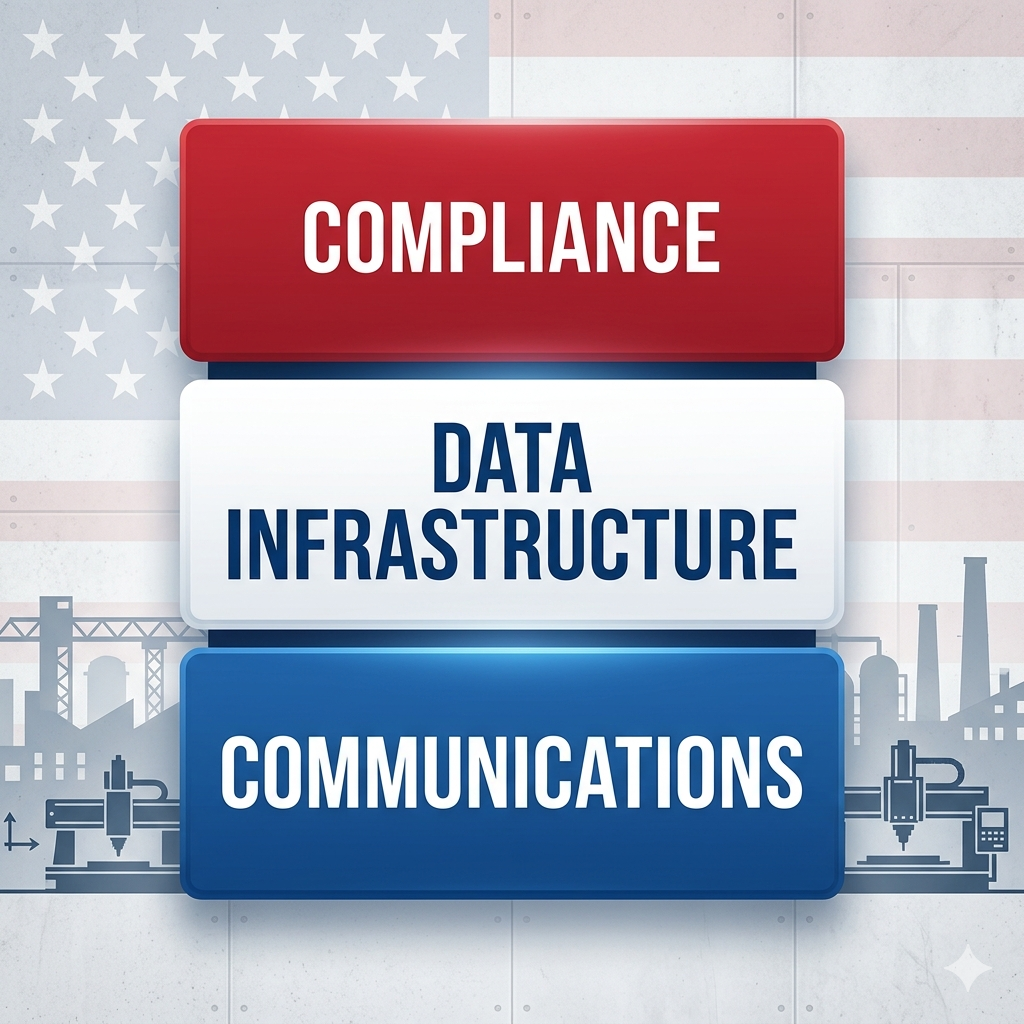
Michigan's manufacturing sector is entering a new era of opportunity as defense spending, aerospace investment, and domestic production continue to expand. But winning tomorrow's contracts requires more than machine capacity and skilled labor. Manufacturers must also modernize their communications, connectivity, cybersecurity, and compliance infrastructure. In this article, we explore why CMMC readiness, reliable data infrastructure, and modern communication systems are becoming critical competitive advantages for Michigan manufacturers seeking growth in defense, aerospace, automation, and advanced manufacturing markets.


Business internet has evolved from dial-up to T1 lines, then cable/broadband, and now to small business fiber. As companies rely more on cloud applications, file sharing, VoIP, video, backups, cameras, AI tools, and real-time communication, the internet connection has become the “performance layer” of the business. Traditional broadband often provides strong download speeds but weaker upload speeds, which can create bottlenecks for modern businesses that move data in both directions. Small business fiber and flex fiber products now give more companies access to fiber-based connectivity at a practical price point, with options such as 300 Mbps, 500 Mbps, and 1 Gbps. Some circuits are symmetrical, meaning upload and download speeds match, while others are asymmetrical. Even when not fully dedicated bandwidth, fiber still provides a stronger foundation because it uses light through glass, offering better reliability, latency, and scalability than older copper or coax-based services. The key question for business owners is no longer simply whether their internet is “fast enough,” but whether their connection is strong enough for how their business actually operates today.
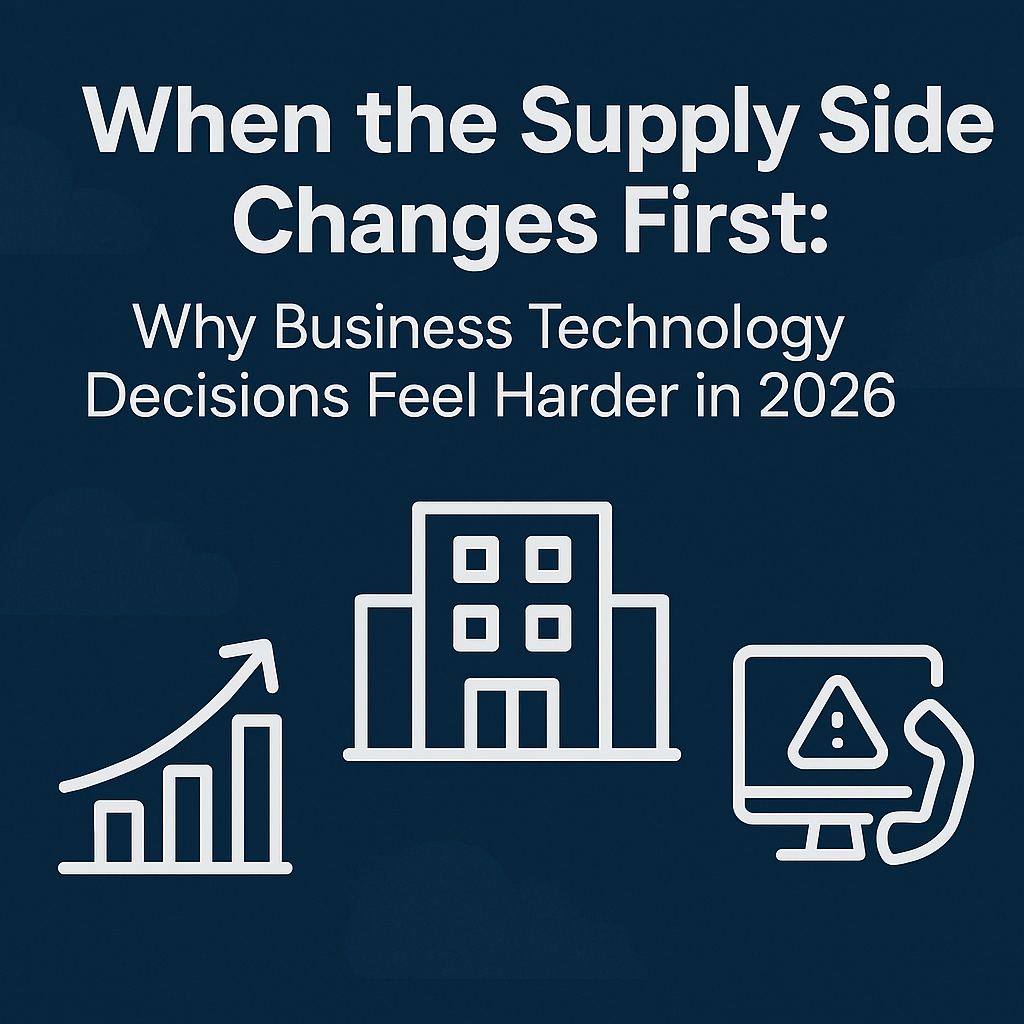
Major technology providers are signaling a structural shift that most businesses haven’t felt yet — but will. As hyperscalers like Microsoft, Meta, and others lock in massive AI and cloud capacity, constraints around power, infrastructure, capital, and talent are moving downstream. At the same time, higher interest rates and tighter financing mean the “cheap money” era is over, making delays more costly and options more limited.
This article breaks down what recent earnings calls and capital spending reveal about where capacity is going, why supply is tightening, and how those changes will impact regional carriers, service providers, and small-to-mid-sized businesses. If you rely on internet, voice, cloud, or data infrastructure to operate, understanding these supply-side dynamics now can help you avoid higher costs, limited availability, and forced decisions later.
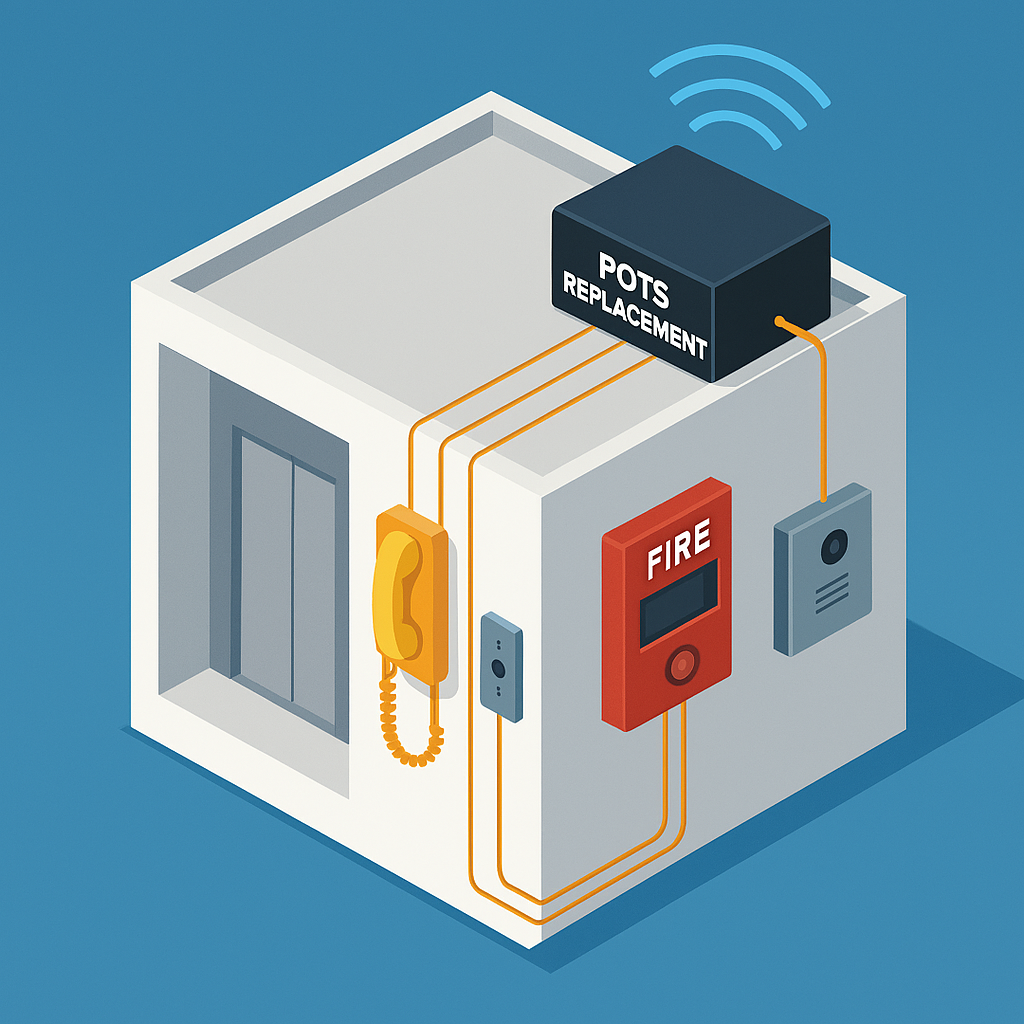
This blog explains how Michigan businesses can replace aging POTS lines as carriers retire copper across the state. Instead of focusing on why POTS is disappearing, this guide walks through the practical solution: modern POTS‑replacement devices that recreate analog dial tone using LTE or 5G backhaul. It covers how these units work, where they are used, why cellular is the preferred method for life‑safety systems, and the cost and reliability benefits of upgrading. The article also outlines how TTSX helps organizations identify remaining POTS lines, choose the right replacement approach, and stay compliant for elevators, alarms, and emergency systems as the industry moves into 2026 and beyond.

Updated for 2026: Traditional POTS lines are becoming more expensive, harder to support, and increasingly risky for businesses that still rely on copper for fire alarms, elevator phones, security systems, fax, and other analog devices. This updated article explains what the POTS sunset means now, why landline costs continue to rise, where standard VoIP may fall short, and why businesses should audit their remaining analog lines before receiving a shutdown notice or facing a compliance issue. TTSX helps businesses identify active POTS lines, separate routine voice services from life-safety systems, and build a managed replacement plan using modern LTE/5G and other approved solutions.

Technical debt is the hidden cost of every shortcut, workaround, and “we’ll fix it later” decision inside an organization’s tech stack. For years, companies have been robbing Peter to pay Paul—pushing upgrades off, stretching aging infrastructure, and hoping tomorrow wouldn’t arrive.
But 2026 is the bill coming due.
AI workloads, distributed teams, and next-gen security requirements are about to expose every buried issue: slow networks, legacy architectures, brittle integrations, and outdated assumptions about what “good enough” looks like.
This blog breaks down what technical debt really is, why it accelerates under emerging AI demands, and how Michigan businesses can stop carrying the burden and start modernizing. It’s the roadmap for leaders who want to trade debt for readiness—before the new landscape forces the issue.

Cybersecurity has entered a new era — one driven by AI, cloud applications, remote work, and increasingly sophisticated attackers. While threats have evolved dramatically, most small and mid-sized businesses are still using outdated tools and practices that leave them exposed.
This article breaks down the current landscape, what AI-powered attacks look like, how defense is changing, and what every business will need over the next decade. The future of cybersecurity is unified, cloud-delivered, identity-based, and powered by real-time AI — and companies that modernize now will be far better prepared for the risks ahead.
From ARPANET to AI: Why the Next Networking Revolution Will Reshape Everything
For more than 50 years, every major leap in technology — personal computers, the internet, mobile, cloud, streaming — has forced networks to evolve. Bandwidth increased, latency improved, and architectures shifted to meet new demands. But nothing has stretched networks the way AI is about to.
This post walks through the entire history of modern networking, decade by decade, showing how each technological wave required a smarter, faster, more resilient infrastructure. And now, AI is driving the biggest shift yet.
Today’s networks were built for human-driven usage. But AI creates nonstop, machine-to-machine communication, enormous data movement, and real-time inference demands that will overwhelm legacy systems. Businesses that upgrade — fiber, 5G, edge compute, AI-managed routing — will accelerate. Those that don’t will bottleneck their own potential.
This article breaks down what’s coming, how AI will fundamentally reshape connectivity, and why the next decade belongs to companies building high-performance networks right now.

During an early dinner, I watched how a restaurant used Toast not just as a POS system, but as an early stage AI-driven operations engine. It reminded me how quickly technology is evolving — and how most small business networks aren’t built for what’s coming. As AI takes over ordering, scheduling, inventory, and customer experience, the real bottleneck isn’t the software… it’s the outdated connectivity underneath it. This post breaks down why AI-ready networks are now essential, what happens when the “weakest link” snaps, and how TTSX helps businesses modernize their foundation before systems fail under future demand.

AI tools can’t perform on outdated networks. Most Michigan businesses don’t realize their internet is now their AI performance layer — the foundation that determines whether automation, cloud systems, and modern tools actually work. This guide explains why traditional connections fail, how SD-WAN and fiber create AI-ready resilience, and why TTSX is helping local companies build the networks that power tomorrow’s intelligence.


Updated for 2026: 5G failover has become an important part of business internet continuity, especially for companies that depend on phones, POS systems, cloud applications, remote access, security tools, and daily online operations. This article explains the difference between basic DIY cellular backup and a managed 5G/SD-WAN continuity solution, including key issues like failover speed, static IP requirements, data usage, VoIP reliability, and ongoing support. It also helps businesses understand when simple backup may be enough, when managed continuity makes more sense, and why reviewing your internet backup plan before an outage is the smarter move.

For decades, telecom has been defined by falling prices and commoditization — a “race to the bottom.” But with over $1.1 trillion in 5G and fiber investment required globally, providers can no longer rely on selling raw data cheaply. This blog explores the Great Telecom Reversal: a shift from flat-rate utility pricing toward bespoke, high-value services. Businesses will see two clear tiers emerge: low-cost commodity connectivity and premium, outcome-driven solutions built on 5G, AI, and cloud platforms. The post explains the forces behind this change, what it means for business leaders, and why the future of telecom is about strategic partnerships, not just the lowest price.

AT&T and other carriers are phasing out traditional copper POTS lines, with major cutoffs and price hikes beginning October 2025. Businesses that still rely on POTS for phones, alarms, elevators, and fax machines face rising costs, limited support, and potential service disruptions. This blog explains what POTS is, why it’s being retired, the risks of waiting, and the best alternatives like VoIP, fiber, and wireless solutions. Learn how TTSX can help audit your systems, secure cost-effective replacements, and ensure a smooth transition before deadlines hit.

The blog post argues that for a business to thrive, its technology must consistently help it save time, reduce risk, and improve reliability. It highlights that many organizations are held back by outdated systems and fragmented vendors, which creates inefficiencies and vulnerabilities. The article breaks down how smart technology choices can streamline operations to save time, how managed IT and security solutions are crucial for reducing cyber and operational risk, and how modern infrastructure ensures 24/7 reliability for customers. The core message is that these three goals are interconnected and that the right technology strategy brings them together as one interlocking system to give a business a competitive edge.
VMware's shift to expensive subscription licensing after the Broadcom acquisition is crushing mid-market IT budgets. Discover why a fully managed OpenStack Private Cloud is the superior, cost-effective alternative. OpenStack eliminates vendor lock-in and perpetual software fees, delivering enterprise-grade performance and built-in resilience (like immutable backups) at up to 50% lower TCO. If your VMware renewal is looming, learn how to migrate to a predictable, sovereign cloud solution.
For today’s small and medium-sized businesses, internet service isn’t just a utility — it’s the foundation of every operation. From cloud apps and VoIP to customer trust, downtime can cost thousands per hour and damage your reputation. In this post, we break down the true cost of outages, compare connectivity options like fiber, cable, and 5G, and explain why redundancy strategies such as cellular failover and SD-WAN are now essential. Learn how strong connectivity drives productivity, supports remote work, and prepares your business for the future with 5G, edge computing, and AI-driven monitoring.

Upgrading your business phone system can feel daunting, but it’s a crucial step for growth. At TTSX, we help small and medium-sized businesses navigate the options, and we hear the same questions every day. This guide provides clear answers to your most pressing questions about cloud communications and Hosted VoIP.