Here at TTSX, we have written a lot about POTS lines going away, the skyrocketing cost of keeping them, and the reasons carriers are retiring copper across Michigan. Those articles covered the problem. What we have not focused on yet is the solution.
This guide fills that gap. It explains how organizations can bring old analog infrastructure into 2026 and beyond, the devices that make it possible, and why upgrading is smart not only from a technology standpoint but also from a cost perspective. If your building still relies on analog lines for elevators, fire panels, alarms, gate entry, or emergency systems, this is the practical roadmap you need.
Why This Matters
Traditional copper POTS lines are being retired across Michigan. Carriers are shutting down the old infrastructure, and many buildings still depend on those lines for critical systems. When a POTS line goes dark, these systems stop working. In many cases, that creates a code violation or a life safety issue.
A POTS replacement device solves this without forcing a full system upgrade.
What a POTS Replacement Device Actually Is
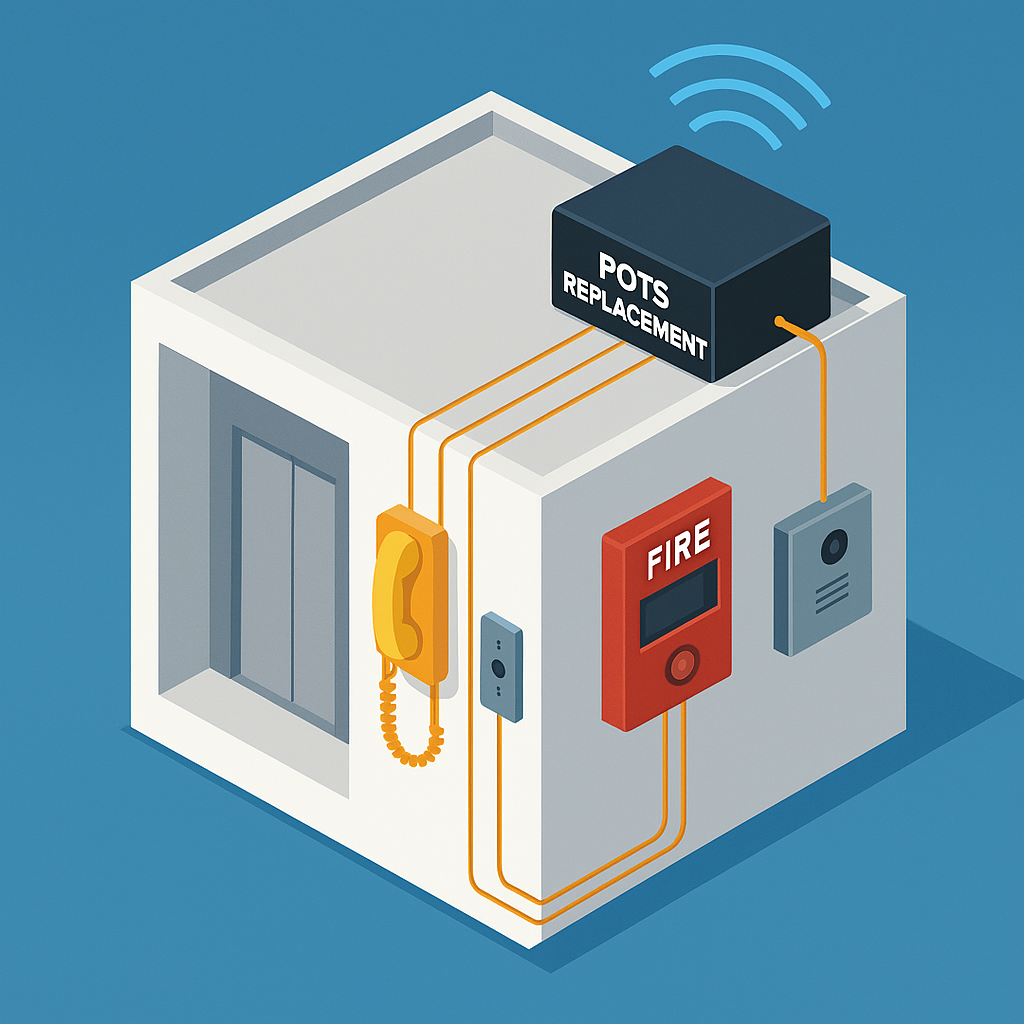
A POTS replacement, often called a POTS in a Box, is a small on‑site unit that recreates a traditional analog phone line while using cellular or IP on the back end. It is essentially a modern digital backbone feeding an old‑school analog port.
Inside the device, you will typically find:
Analog Line Emulator (ATA): Generates dial tone, ringing voltage, and loop current just like a copper POTS line. Cellular Modem (LTE or 5G): Provides the backhaul so the line works even if the building’s internet goes down. Battery Backup: Keeps the line alive during power outages, often for 24 hours or more. Monitoring and Heartbeat: Reports line status, battery health, and connectivity to ensure reliability.
To the elevator phone or fire panel, it feels like a normal POTS line. To the carrier, it is a secure SIP call riding over LTE or 5G.
Where These Devices Are Used
You will find POTS replacement devices anywhere a business still relies on analog lines:
- Elevator emergency phones
- Fire alarm panels
- Burglar alarms
- Gate and door entry systems
- Pool phones
- Parking structures
- Legacy fax lines
- Industrial modems and SCADA equipment
If the system must always work, it is usually still on POTS.
Why Cellular Is the Preferred Backhaul
Most POTS replacement solutions use LTE or 5G because:
- It is independent of the building’s internet
- It works during outages
- It bypasses firewalls and LAN issues
- It is easier to certify for life safety
- It avoids dependency on the customer’s ISP
This is why carriers are pushing cellular based solutions as the default.
Benefits for Michigan Businesses
- Avoid service shutdowns as copper lines are retired
- Lower monthly cost compared to legacy POTS
- Higher reliability with cellular failover
- Meets life safety requirements
- No major equipment upgrades needed
Most businesses can replace multiple POTS lines with a single device.
How TTSX Helps
We work with Michigan organizations to:
- Identify which lines are still on copper
- Determine which systems require analog support
- Recommend the right POTS replacement approach
- Coordinate installation with the carrier
- Ensure compliance for elevators, alarms, and life safety systems
If you want clarity on what is still running on POTS in your building and what needs attention before the carriers shut it off, we can walk you through it.
For a broader look at how POTS retirement is unfolding nationwide — and how businesses can plan a compliant transition — see our POTS replacement guide.